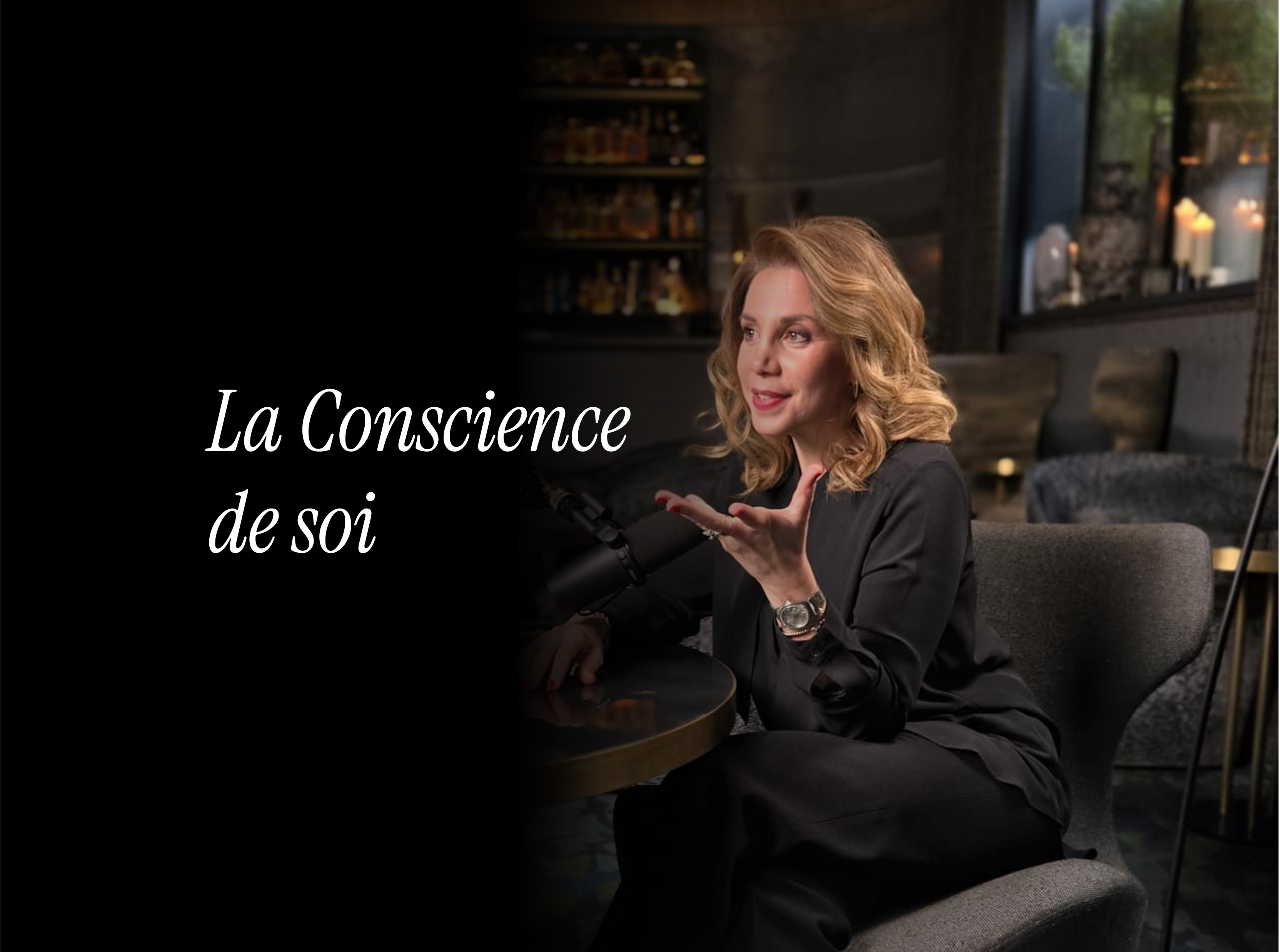
Conscious Leadership: why knowing yourself has become a strategic act?
The Illusion of Decisional Neutrality
In a professional world marked by uncertainty, complexity, and constant pressure, the leader's role has never been more exposed. Decisions must be quick, transformations are permanent, and human expectations are higher than ever. In this context, leadership is no longer played out solely through mastery of tools or strategic relevance, but through the quality of the inner posture of those who lead.
For a long time, self-knowledge was associated with personal development — even seen as a marginal introspective pursuit, somewhat detached from business challenges. Today, that view is outdated. Knowing yourself has become a strategic act, at the very heart of decision quality, managerial coherence, and collective performance.
A leader never decides from a neutral space. They decide with their history, their beliefs, their fears, their comfort zones, and their blind spots. Under pressure, these inner dimensions express themselves with even greater force. Automatic reactions, defence mechanisms, and the need for control can then influence decisions — often without the leader being fully aware of it.
Self-Awareness as a Strategic Lever
This is precisely where conscious leadership takes on its full meaning. It is not about gratuitous introspection, but about the ability to observe what is playing out within, so as not to be held prisoner by it. Self-awareness allows you to distinguish emotion from decision, reaction from action, ego from collective interest.
Bill George's work on authentic leadership shows that the most effective leaders are those who act in coherence with their values while remaining aware of their fragilities (Authentic Leadership, 2003). This inner coherence creates stability, clarity, and confidence around them.
In complex environments, this quality of presence becomes a true governance lever. A conscious leader is able to slow down before acting, question their own certainties, and welcome divergent points of view without feeling threatened. In doing so, they create a space where decisions become more accurate, more collective, and more sustainable.
The Invisible Impact of the Leader's Posture
This work of consciousness has a direct impact on teams. The leader sets the tone — often unintentionally. Their level of stress, their way of handling uncertainty, their ability to acknowledge their limits, all spread throughout the organisation. The leader's inner posture shapes the collective emotional climate.
Clarity and Coherence in Uncertain Times
Systemic approaches, such as Theory U developed by Otto Scharmer, show that the deepest organisational transformations come from a shift in the way leaders see and stand. It is no longer only about steering the future from the past, but about making oneself available to what is emerging — with clarity and responsibility.
From this perspective, conscious leadership becomes a key competency for navigating uncertainty. It allows leaders to face uncomfortable emotions such as doubt, fear, or anger, without projecting them onto their teams. It helps them stay the course while remaining open to adjustment.
What sets conscious leadership apart is not the absence of vulnerability, but the ability to acknowledge it without being controlled by it. To know yourself is to accept looking at your shadows as much as at your strengths — in order to act with greater accuracy.
Some elements, often invisible, make all the difference in a leader's posture:
- The ability to question oneself before reacting
- Clarity about one's own mechanisms
- Alignment between what is said and what is embodied
- The quality of presence in pivotal moments
These dimensions are not a matter of know-how, but of conscious interpersonal mastery. They are not taught like tools — they are developed through experience, support, and stepping back.
In a world where the traditional landmarks of leadership are being shaken, knowing yourself is no longer a luxury or an option. It is a responsibility for those who influence teams, cultures, and collective trajectories.
Conscious leadership does not promise ready-made answers. It offers something better: the ability to make more accurate decisions, to create solid human environments, and to support sustainable performance, deeply rooted in awareness and coherence.
A leadership grounded in self-awareness enables:
- Decisions that are more aligned, less reactive
- A more stable and reassuring emotional climate
- A stronger relationship of trust with the teams
- A greater capacity to navigate uncertainty
These effects are not immediately visible, but they durably transform the quality of leadership and collective performance.
References
- Bill George — Authentic Leadership (2003)
- Otto Scharmer — Theory U (2009)
- Korn Ferry — studies on self-awareness and leader performance (2015–2022)
Cela pourrait vous intéresser.
Cela pourrait vous intéresser.
Cela pourrait vous intéresser.